
Japan is a country that gets under your skin in the best possible way — where thousand-year-old temples sit in the shadow of skyscrapers, where a bowl of ramen from a vending-machine restaurant can be one of the best meals of your life, and where the trains run so precisely that a one-minute delay makes the news. If you're planning your first trip and wondering where to start, this guide covers the absolute must-see places — and a few that deserve far more attention than they get.
Tokyo: Start With the World's Greatest City
Tokyo isn't one city — it's dozens of villages that grew together into a metropolis of 37 million people. Spend at least 4-5 days here. Shibuya Crossing is the obvious starting point: the world's busiest pedestrian intersection, best viewed from the Starbucks above Tsutaya (grab a window seat) or from the new Shibuya Sky observation deck. From there, walk to Harajuku's Takeshita Street for the sensory overload of youth culture, then cut through Yoyogi Park to Meiji Jingu — a vast Shinto shrine hidden inside a forest that feels a world away from the neon. Akihabara is essential even if you're not into anime: the sheer density of electronics shops, arcades, and themed cafés is unlike anything else on earth. Shinjuku at night — specifically the narrow alleys of Omoide Yokocho (Memory Lane) and Golden Gai — gives you Tokyo's soul in yakitori smoke and tiny bars seating six people. For a breather, the teamLab Borderless digital art museum in Azabudai Hills is genuinely mind-bending, and the Tsukiji Outer Market still serves the freshest sushi breakfast you'll ever eat.
Day Trip: Kamakura — The Coastal Kyoto Alternative
Just an hour south of Tokyo by train, Kamakura packs temples, beaches, and a giant bronze Buddha into a walkable seaside town. The Great Buddha (Daibutsu) at Kotoku-in dates from 1252 and survived a tsunami that washed away the temple around it. The real highlight, though, is Hokokuji — the 'Bamboo Temple' — where you can sit with matcha tea overlooking a grove of 2,000 bamboo stalks with a fraction of Kyoto's crowds. Kamakura's laid-back surf-town energy is a welcome contrast to Tokyo, and it makes for one of the easiest and most rewarding day trips in Japan.
Hakone & Mount Fuji: Japan's Most Iconic View
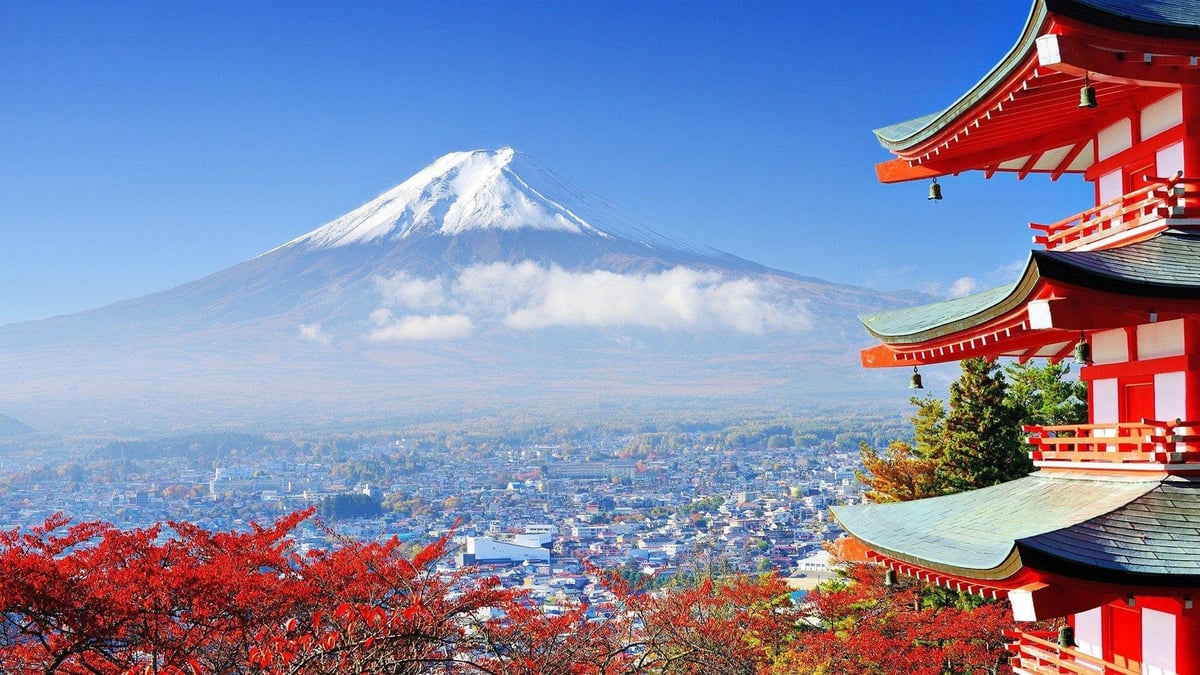
Mount Fuji is Japan's symbolic heart, and the best way to experience it on a short trip is Hakone — a hot-spring town in a volcanic valley about 90 minutes from Tokyo. The Hakone Loop is a brilliant piece of transport theatre: a mountain train, a cable car over sulphur vents, a ropeway with Fuji views, and a pirate ship across Lake Ashi (yes, a pirate ship — just go with it). Stay overnight at a ryokan (traditional inn) with an onsen (hot spring bath). The water comes from volcanic springs, the kaiseki dinner is a multi-course work of art, and soaking in an outdoor bath while Fuji catches the sunset is one of life's great travel moments. Book ryokans at least a month ahead — the good ones fill up fast.
Kyoto: The Japan You've Been Imagining
If Tokyo is Japan's future, Kyoto is its soul. Seventeen UNESCO World Heritage Sites, over 2,000 temples and shrines, and a city layout that follows an ancient Chinese grid. You need 3-4 days minimum. The Fushimi Inari Shrine — with its seemingly endless tunnel of 10,000 vermilion torii gates — is the iconic shot, and it's worth hiking past the first section where 95% of visitors turn back. The higher you climb, the emptier it gets, and the more magical the experience becomes. Kinkaku-ji (the Golden Pavilion) is the postcard, but Ginkaku-ji (the Silver Pavilion) and its moss garden offer a quieter, more contemplative beauty. The Arashiyama Bamboo Grove is best visited at dawn — by 9am it's shoulder-to-shoulder. The real Kyoto magic, though, is in the unplanned moments: walking the Philosopher's Path along the canal, stumbling into a family-run tofu restaurant in a 200-year-old townhouse, or spotting a maiko (apprentice geisha) hurrying to an appointment in Gion at dusk.
Nara: Deer, Temples, and Japan's Largest Bronze Buddha
Nara was Japan's capital in the 8th century, and its UNESCO-listed temple complex remains one of the country's most impressive historical sites. It's an easy day trip from Kyoto (35 minutes by train). The stars are Todai-ji — housing a 15-metre-tall bronze Buddha inside the largest wooden building in the world — and Nara Park's 1,200 friendly-but-assertive deer, considered sacred messengers of the Shinto gods. Buy the shika senbei (deer crackers) and prepare to be mobbed in the most charming way possible. The deer bow for treats. They have learned this from watching humans bow to each other. Let that sink in.
Osaka: Japan's Kitchen (Come Hungry)
Osaka is Japan's food capital, and the city's unofficial motto is kuidaore — 'eat until you drop.' It's also brash, funny, and direct in a way that sets it apart from Tokyo's reserve and Kyoto's elegance. Dotonbori at night is a sensory assault in the best possible way: giant mechanical crabs, neon rivers, and the smell of takoyaki (octopus balls), okonomiyaki (savoury pancakes), and kushikatsu (deep-fried skewers) competing for your attention. Osaka Castle is worth seeing from the outside — the park around it is beautiful — though the interior is a modern museum rather than a historical interior. For an unexpected cultural knockout, the Osaka Kaiyukan is one of the world's best aquariums, built around a nine-metre-deep central tank with whale sharks. Give it at least 2-3 days.
Hiroshima & Miyajima: Two Days That Stay With You Forever
Hiroshima is a must. Not an easy must — an important one. The Peace Memorial Park and Museum tell the story of August 6, 1945, with honesty, dignity, and a clear-eyed commitment to peace that will move you deeply. The Atomic Bomb Dome, preserved as it stood after the blast, is one of the world's most powerful monuments. From Hiroshima, a short ferry ride takes you to Miyajima Island — home to the famous 'floating' torii gate of Itsukushima Shrine. At high tide, the gate appears to float on the Seto Inland Sea; at low tide, you can walk right up to it. The island's wild deer (less pushy than Nara's) and the ropeway up Mount Misen for panoramic views of the island-dotted sea make this one of Japan's most beautiful places.
Kanazawa: Kyoto Without the Crowds
Kanazawa is what Kyoto was 20 years ago — impeccably preserved Edo-period districts, one of Japan's three greatest gardens (Kenroku-en), and a samurai quarter where you can walk the same streets the warrior class walked 400 years ago. The Higashi Chaya geisha district, with its wooden lattice-fronted teahouses, is genuinely atmospheric in ways that Gion's busiest streets no longer are. The 21st Century Museum of Contemporary Art and the Omicho Market (Kanazawa's answer to Tsukiji, famous for snow crab) round out a city that punches well above its weight. It's on the shinkansen line from Tokyo — about 2.5 hours — and deserves at least two full days.
The Japanese Alps: Takayama & Shirakawa-go
For a completely different Japan — mountain villages, thatched-roof farmhouses, and morning markets along a crystal-clear river — head to Takayama and Shirakawa-go in the Japanese Alps. Takayama's beautifully preserved old town (Sanmachi Suji) has sake breweries, craft shops, and the morning market where farmers sell pickles and miso from wooden stalls. A 50-minute bus ride away, Shirakawa-go is a UNESCO village of gassho-zukuri farmhouses — steep thatched roofs built to withstand heavy snow, some over 250 years old. Visit in summer and the surrounding rice paddies are brilliant green. Several farmhouses operate as minshuku (family-run guesthouses) where you can sleep under the thatched roof and eat home-cooked regional food. This is rural Japan at its most authentic.
Practical Tips for Japan First-Timers
Get a Japan Rail Pass before you arrive — it pays for itself with one round trip between Tokyo and Kyoto and unlocks the shinkansen (bullet train) network for 7, 14, or 21 days. You must buy the exchange order before arriving (the pass is only for foreign tourists). Cash is still king in Japan — most small restaurants, temples, and rural guesthouses don't take cards, so carry yen. 7-Eleven ATMs accept foreign cards and are everywhere. Learn four phrases: arigatou gozaimasu (thank you), sumimasen (excuse me/sorry), onegaishimasu (please), and oishii (delicious) — they'll take you far. Get a pocket Wi-Fi or eSIM at the airport — Google Maps is essential for navigating Tokyo's address system, which is famously incomprehensible to outsiders. And finally, do NOT tip — it's not the custom and can actually offend. A bow and a sincere 'arigatou gozaimasu' is more meaningful than any amount of money left on a table.