
Greece Travel Guide: Top Islands, Cities & Resorts from May to October
Greece is the Mediterranean distilled to its purest form — a land where myth and landscape blur, where days are measured in shades of turquoise, and where every meal feels like it was prepared by someone's nonna who has strong opinions about olive oil. From the whitewashed villages of Santorini clinging to volcanic cliffs to the labyrinthine alleyways of Rhodes' medieval Old Town, Greece delivers a sensory intensity unmatched in Europe. The prime travel window runs from May through October, when the weather is warm, the sea is swimmable, and everything is open. This guide covers Greece's top islands, mainland destinations, and coastal resorts — what makes each special, when to visit, and how to choose between them for the trip of a lifetime.
Santorini — The Postcard Island
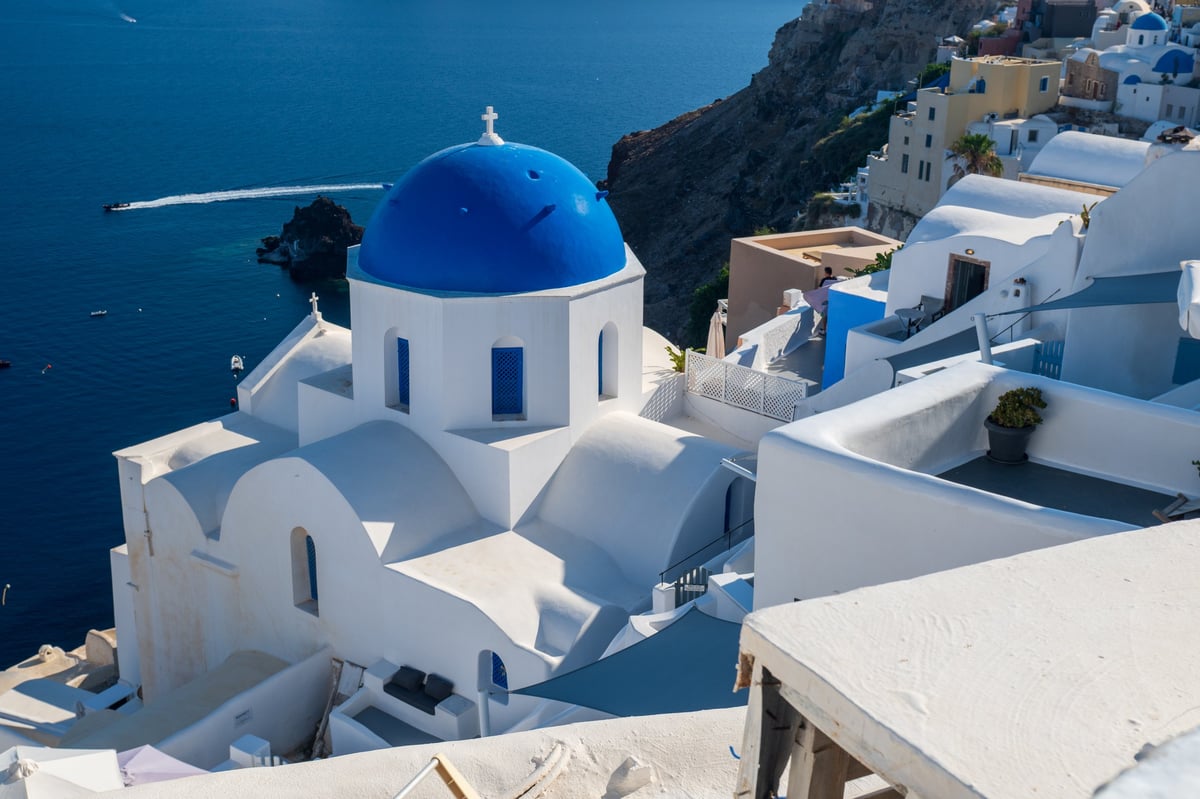
Santorini is what happens when a volcanic caldera, Cycladic architecture, and the world's most photogenic sunset conspire to create the most recognizable Greek island on Earth. The island's main towns — Fira, Oia, and Imerovigli — perch along the caldera's lip like a crown, their whitewashed cube-houses and blue-domed churches cascading toward the Aegean. Santorini is best visited in late May—June or September—early October, when the crowds thin out but the weather remains spectacular (25–28°C). July and August are peak crush — expect shoulder-to-shoulder sunset viewing in Oia and cruise lines depositing thousands daily. Beyond the caldera views: visit the ancient ruins of Akrotiri (a Minoan Bronze Age settlement preserved by volcanic ash), taste Assyrtiko wines at Santo Wines, hike the 10 km trail from Fira to Oia along the caldera edge, and take a catamaran cruise to the volcanic hot springs. Stay in Firostefani or Imerovigli for the same views at a slightly less eye-watering price than Oia. Budget: €60–80 for a guesthouse inland, €200+ for caldera-view suites.
Mykonos — Glamour, Beaches & Nonstop Nightlife
Mykonos is the glittering exception to Greek island tranquility — a playground where superyachts outnumber fishing boats in the harbor and the party runs until sunrise. But Mykonos has two distinct personalities: in July and August, it's one of Europe's premier party destinations with beach clubs (Scorpios, Nammos, Super Paradise Beach Club) attracting international DJs and eye-watering minimum spends. Visit in June or September, however, and Mykonos reveals its gentler side — still chic, but with space to breathe. The Chora (Old Town) is a deliberately confusing maze of narrow streets, boutique shops, and bougainvillea-draped corners — legend says the labyrinthine layout was designed to disorient pirate raiders. Essential experiences: watch sunset from Little Venice with a cocktail, explore Chora's Matoyianni Street for shopping, swim at Elia Beach or Agrari Beach for a quieter vibe, and take a day trip to the archaeological island of Delos — the mythical birthplace of Apollo and one of Greece's most important ancient sites. Mykonos is expensive by Greek standards: budget €100+ for a basic room in season, €300+ for something with a view.
Crete — The Island That Has Everything
Crete is less an island, more a country unto itself — Greece's largest landmass, a 260 km-long powerhouse of dramatic gorges, ancient Minoan palaces, Venetian ports, and some of the finest beaches in the Mediterranean. The southwest coast from Chania to Paleochora holds a claim to Greece's best coastline: Elafonissi with its pink sand, Balos Lagoon with impossibly turquoise shallows, and the hike down the Samaria Gorge (16 km, Europe's longest) ending at the Libyan Sea. Crete's season runs longer than the Cyclades — from late April through October — with September being the sweet spot when sea temperatures peak and the summer crowds have left. The cities matter here too: Chania's Venetian harbor is a masterwork of overlapping civilizations (Venetian, Ottoman, Greek, all layered like pastry), Heraklion is home to the Minoan palace of Knossos, and Rethymno has a remarkably preserved Renaissance Old Town with a massive Venetian fortress. Cretan cuisine deserves its own article: dakos (barley rusks with tomato and myzithra cheese), kalitsounia (cheese pies), lamb with stamnagathi (wild greens), and raki — the fiery local spirit offered complimentary at the end of every meal, whether you want it or not. Crete is also Greece's best value: €50–70 for a comfortable room, meals under €15 at tavernas.
Rhodes — Medieval Grandeur & Endless Beaches
Rhodes occupies a unique place in the Greek imagination — a Dodecanese island where Crusader knights built one of medieval Europe's best-preserved walled cities, and where the eastern coast unfurls an almost unbroken chain of sandy beaches washed by absurdly clear water. The Old Town of Rhodes is a UNESCO World Heritage site and the largest inhabited medieval town in Europe — walking its cobbled Street of the Knights at dusk, with the Palace of the Grand Master looming ahead, is genuinely transportive. The best beach in Rhodes is a matter of fierce local debate: Tsambika Beach (golden sand, shallow waters, family-friendly), Anthony Quinn Bay (a small cove named after the actor who fell in love with it filming The Guns of Navarone), and Prasonisi at the island's southern tip where the Aegean and Mediterranean meet — a windsurfing and kitesurfing paradise. The medieval Old Town stays lively all season, but the main tourist hub of Faliraki quiets significantly in May and October. Best time: June and September—October for the ideal combination of warm sea, open attractions, and manageable crowds.
Corfu — The Lush Ionian Gem
Corfu is the anti-Cyclades: green, lush, and influenced as much by Venetian, French, and British rule as by Greece itself. This Ionian island receives more rainfall than its Aegean cousins, and the result is an almost tropical landscape of cypress, olive groves, and wildflowers. Corfu Town is one of Greece's most elegant urban ensembles — the Liston arcade (modeled on Paris's Rue de Rivoli), the Spianada (Greece's largest square), and the massive Old and New Fortresses form a streetscape that feels closer to Trieste or Venice than to Athens. The northeast coast — nicknamed 'Kensington-on-Sea' for its long association with British visitors and expats — features coves and pebble beaches framed by dense greenery; the Paleokastritsa area on the west coast offers dramatic limestone cliffs above impossibly blue bays. The seafood is exceptional — try bourdeto (spicy fish stew), pastitsada (rooster in tomato and wine), and kumquat liqueur (a Corfiot specialty). Best months: May—June for the wildflowers and mild temperatures, September for warm sea without the August crowds.
Athens — The Unmissable Gateway
Athens polarizes first-time visitors. Many treat it as a obligatory overnight stop between the airport and the ferry to the islands — and make no mistake, the city has areas of frantic traffic, brutalist concrete, and summer heat that can feel punishing. But Athens rewards visitors who give it more than a day: the Acropolis and its museum rank among the world's greatest cultural experiences, the Plaka and Anafiotika neighborhoods beneath the Acropolis have genuine charm, and the food scene is in the middle of a genuine renaissance — from Michelin-starred restaurants in revived industrial spaces to street-corner souvlaki joints that cost €3.50 and taste like revelation. Key experiences: the Acropolis (go at 8am opening to avoid crowds and heat), the National Archaeological Museum, the Stavros Niarchos Foundation Cultural Centre (Renzo Piano's stunning gift to the city), and the central market on Athinas Street. Athens has the longest viable season of any Greek destination — April through late October — and makes an excellent base paired with island day trips. Budget €50–80 for a good central hotel.
Naxos & Paros — The Perfect Pair
These two Cycladic middleweights offer what their heavyweight neighbors (Mykonos, Santorini) can't: genuine Greek island life at reasonable prices with beaches that rival anything in the archipelago. Naxos, the largest Cycladic island, is the standout. Its Chora features a stunning Venetian Kastro (castle) and a Portara — a massive marble doorway to an unfinished 6th-century BC temple of Apollo, standing alone on a small islet connected by causeway, framing epic sunsets. The beaches are the draw: Agios Prokopios, Agia Anna, and Plaka form a continuous 5 km stretch of golden sand backed by dunes and cedar trees. Inland, Naxos has mountain villages (Halki, Apiranthos) and family-run distilleries making kitron (a citron liqueur). Paros, 45 minutes by ferry, is trendier but still relaxed — Naoussa is a photogenic fishing village turned boutique-lined dinner destination, and the Golden Beach is a windsurfing center of international caliber. Both islands are safe bets from May through mid-October. Budget €50–70 for comfortable rooms; meals €12–20.
Zakynthos — Shipwreck Beach & Beyond
Zakynthos (Zante) holds one of Greece's most photographed locations — Navagio Beach, or Shipwreck Beach, a crescent of white sand and impossibly blue water wrapped by sheer limestone cliffs, accessible only by boat with the rusting hulk of a smuggler's freighter lying mid-strand. Yes, the photos oversaturate reality — but Navagio genuinely delivers in person, especially from the viewing platform above. Zakynthos offers more than its postcard centerpiece: the Blue Caves along the northern coast, the protected nesting beaches of the endangered loggerhead sea turtles (Caretta caretta) in Laganas Bay, and the traditional villages of the mountainous interior. The island's southern and eastern coasts (Laganas, Tsilivi, Argassi) are heavily developed — great for families wanting all-inclusive convenience, less great for travelers seeking authenticity. For the latter, stay in the north around Agios Nikolaos or in Zakynthos Town. Best time: late May—June and September for warm weather before and after the peak party season.
Thessaloniki — Greece's Cultural Capital
Greece's second city is criminally underrated and, for those in the know, that's precisely the appeal. Thessaloniki is younger, cooler, and arguably has the country's best food scene — a legacy of its position as a crossroads between the Balkans, the Aegean, and the Near East. The waterfront promenade stretches for 5 km from the White Tower (the city's symbol) to the concert hall, passing sculptures, gardens, and bars. The Ano Poli (Upper Town) preserves Ottoman-era houses and the city's Byzantine walls, with views across the Thermaic Gulf to Mount Olympus. Thessaloniki's food culture justifies a trip on its own: bougatsa (custard or cheese-filled phyllo pastry, best at the legendary Bougatsa Giannis), gyros that northern Greeks insist are superior to Athens', and a coffee culture that occupies entire squares. The city also serves as a gateway to the Halkidiki peninsula, a three-pronged paradise of beaches (Kassandra for nightlife, Sithonia for natural beauty, Athos for the monastic republic — men only). Thessaloniki's season: April—October, with the cultural highlight being the Dimitria festival (September—October).
Month-by-Month Guide: Choosing Your Dates
May is arguably the ideal month — all archaeological sites, hotels, and restaurants are open, the sea is warming up (20–22°C), wildflowers carpet the hillsides, prices are 30–40% lower than peak season, and you'll share the Acropolis with hundreds rather than thousands. June is peak in miniature — perfect weather (25–28°C), warm sea, longer daylight, but without the crushing density of July—August. July and August are peak summer: temperatures reach 32–38°C on the islands (even hotter in Athens), everything is open and buzzing, but prices are at their highest and the crowds — particularly on Santorini, Mykonos, and Rhodes — can overwhelm. If you must travel in peak summer, go to Crete or Naxos, which absorb crowds better. September is the sleeper pick and arguably the sweet spot: the sea is at its warmest (24–26°C), the August crowds have receded, prices drop 15–25% from August peaks, and the weather remains superb through mid-October. October is the shoulder-season wildcard — the first two weeks are often glorious (22–25°C) and you'll have beaches practically to yourself, but rain and wind become more likely in the second half and some seasonal businesses begin to close. For the Greek islands, May—June and September reign supreme. For Athens and Thessaloniki, April—October all work.
Practical Tips for Greece Travel
Ferry travel is essential: book high-speed ferries in advance (especially July—August and for routes serving Santorini/Mykonos) via Ferryhopper. Island hopping is the classic Greek travel experience — plan 2–3 days per island minimum; attempting six islands in ten days is a recipe for ferry-induced burnout. The weather dictates everything — in peak summer, sightsee early morning, swim midday, emerge again after 5pm when the light turns golden. Greece uses the euro; ATMs are plentiful on all major islands and cities; and the country remains remarkably safe — violent crime against tourists is rare, though pickpocketing in crowded areas (Athens metro, Santorini sunsets in peak season) warrants vigilance. The tap water is safe to drink on the mainland but stick to bottled water on most islands. English is widely spoken throughout the tourism industry. Tipping: 10% at restaurants if service was good, round up for taxis. For accommodation, book well ahead for Santorini and Mykonos (popular caldera-view and beachfront rooms sell out months in advance); on other islands and the mainland, last-minute bookings are viable. Dress respectfully when visiting monasteries and churches — cover shoulders and knees.
Ready to plan your trip?
Ready to discover Greece's stunning islands and cities? Compare flights, hotels, and ferry routes across Skyscanner, Booking.com, and Ferryhopper — find the best deals and book your Greek adventure today.
Find Greece Travel Deals