
Must-Visit Autumn Destinations Around the World
Autumn is the most underrated travel season on the calendar — and for good reason it rewards those willing to look past summer's beaches. As the crowds thin and the temperatures soften, the world transforms: forests ignite in amber and crimson, vineyards turn gold under a low slanting sun, and cities shed their tourist frenzy for something calmer and far more local. Autumn travel also tends to be cheaper, less crowded, and more comfortable than the peak summer months, whether you are chasing fall foliage in a maple forest or wandering through medieval towns in a light jacket. The catch is timing — autumn color is fleeting, sometimes lasting only a couple of weeks in a given place, which makes knowing exactly where and when to go essential. This guide covers the world's most spectacular autumn destinations across five continents, when to visit each for peak color, and practical advice for planning a fall trip anywhere in the world.
Japan — Kyoto & Nikko's Temple Maples
Japan has turned the appreciation of autumn leaves into a fine art — momijigari, literally 'maple hunting', has been a national pastime for centuries, and nowhere does it better than Kyoto. From mid-November to early December, the city's hundreds of temples and gardens erupt in fiery reds, oranges, and golds, reflected in raked gravel and still ponds. The standout spots are Tofuku-ji, whose Tsutenkyo Bridge floats above a valley of searing red maples; Kiyomizu-dera, where a wooden stage juts out over a blazing maple hillside; and Eikan-do, famous for its evening illuminations. Further east, Nikko's mountainous shrines and the Irohazaka winding road offer some of the country's most dramatic foliage alongside the ornate Toshogu Shrine. Tokyo's Rikugien and Koishikawa Korakuen gardens provide a city-friendly option with evening light-ups. Time your visit carefully: peak color in Kyoto typically falls between November 20 and December 5, and the most famous temples get extremely crowded, so arrive at opening (often 8:30am or earlier) to have the views to yourself. Combine your trip with the seasonal food — chestnut rice, persimmons, and matsutake mushrooms — and you'll understand why autumn is arguably Japan's finest season.
New England, USA — The Classic Foliage Road Trip
New England is the world's benchmark for fall foliage — a region so synonymous with autumn that leaf-peeping is practically a civic duty here. From late September through late October, the hardwood forests of Vermont, New Hampshire, and Maine burn through a sequence that runs from the far north southward: sugar maples, birches, and oaks turning crimson, tangerine, and gold in waves that sweep down the map. The classic route runs through Vermont's Green Mountains and along the Route 100 corridor, past covered bridges and white-steepled villages that look engineered for postcards. New Hampshire's White Mountains and the Kancamagus Highway — a 34-mile scenic byway through the national forest — deliver some of the most reliable color and are best driven mid-October. Acadia National Park in Maine offers a different flavor entirely: granite peaks plunging into the Atlantic, with Cadillac Mountain (the first place in the US to see the sunrise for much of the year) overlooking a coastline of red-blueberry barrens and spruce. Practical advice: book lodging months in advance, check state foliage trackers (they publish weekly color maps), and go on a weekday to avoid the worst crowds. Peak color shifts by roughly 2 weeks from north to south, so plan your dates around your destination, not the other way around.
Tuscany & Piedmont, Italy — Vineyards in Gold
Italy's autumn is a quieter, more sensual affair than the postcard summer — cooler days, longer shadows, and vineyards turning the colour of honey and rust. Tuscany in October and early November is arguably the region at its most beautiful: the Val d'Orcia's rolling hills, cypress-lined driveways, and hilltop towns like Pienza and Montalcino look their absolute best under the softer autumn light, and the wine harvest (vendemmia) is in full swing. The Chianti hills between Florence and Siena offer some of the world's most beautiful driving — narrow roads winding past stone farmhouses and olive groves dusted with frost. Further north, Piedmont's Langhe hills are the epicenter of Italy's truffle season: Alba hosts its famous White Truffle Fair on weekends from October through November, and the surrounding vineyards produce some of the country's finest Barolo and Barbaresco wines. Slow down, spend a long afternoon over a truffle-heavy lunch, and watch the fog roll through the valleys in the early morning. This is also a superb time for food lovers: porcini, chestnuts, and game appear on menus across the region, and the summer tourist crush has vanished completely.
Canadian Rockies — Larch Season in Banff
The Canadian Rockies experience a brief, spectacular autumn phenomenon that most travelers miss entirely: larch season. For just two to three weeks from late September to mid-October, the Alpine larch trees — the only conifer in the Rockies that changes color and drops its needles — turn a brilliant golden yellow, creating a scene of gold firs against dark evergreens and snow-dusted peaks. The most famous spots are Larch Valley near Lake Louise (a steep, rewarding hike past a chain of tarns) and the Lake O'Hara area in Yoho National Park, where access is limited by a reservation lottery. Banff and Jasper National Parks offer easier options: the Bow Valley Parkway, Moraine Lake's Rockpile Trail, and the sunny slopes around Mount Norquay. The timing is critical and the window is short — check local park reports for larch conditions, and be prepared for snow, since early autumn storms can arrive quickly. It's a bucket-list trip for photographers, and the combination of golden larches, turquoise glacial lakes, and early snow is unlike anything else in the world.
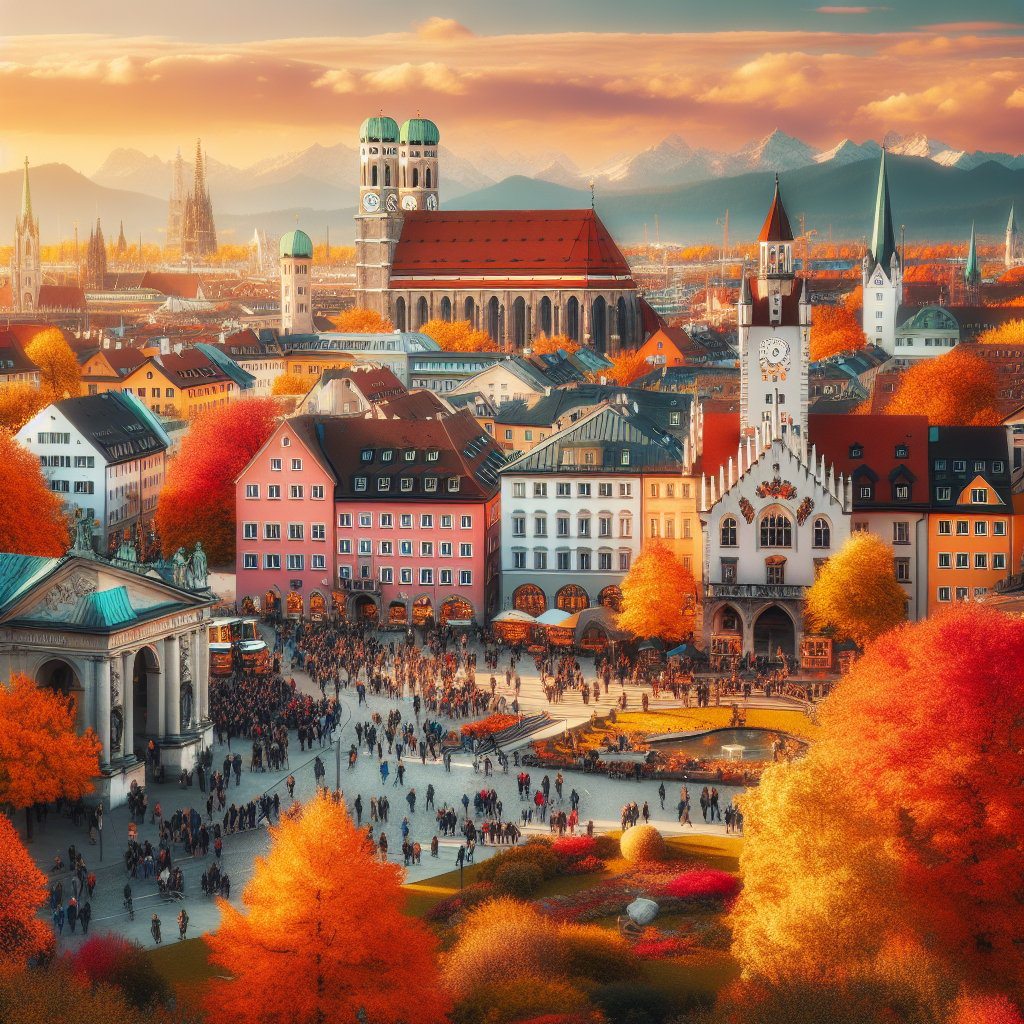
Munich & Bavaria, Germany — Oktoberfest & Alpine Gold
Deutschland's Bavaria combines two quintessential autumn experiences into one trip. Oktoberfest, the world's largest folk festival, runs from mid-September into the first Sunday of October and turns Munich into a sea of beer tents, brass bands, and lederhosen — an experience that is far more family-friendly than its reputation suggests, with daytime parades and traditional food. Once the festival winds down, Bavaria's natural beauty takes center stage: the Alps are at their most photogenic, with larches and beeches turning gold against the limestone peaks, and the region's lakes — Königssee, Tegernsee, and Walchensee — mirror the autumn colors. Drive the Romantic Road south to Neuschwanstein Castle, whose turrets against a backdrop of amber forest are the stuff of fairy tales. Autumn is also the season for Bavarian cuisine at its best: fresh game, pumpkin, and the sweet young wines (Federweißer). The region is extremely well connected by train — Munich makes an ideal base, with day trips to the castles, lakes, and Alpine villages all within a couple of hours.
Patagonia, Chile & Argentina — Spring Into Autumn's Mirror
Here is a quirk worth knowing: in the Southern Hemisphere, the seasons are reversed, so Patagonia's autumn falls in March, April, and May — while the Northern Hemisphere is enjoying spring. That makes Patagonia the answer for anyone who wants a second autumn in a single year. The colors here are different from the northern forests: instead of maples and birches, Patagonia blazes with lenga and ñire trees turning deep orange and rust-red against the dramatic backdrop of the Andes. Torres del Paine in Chilean Patagonia is the crown jewel — the iconic granite towers and the 'W' trek are at their best in the shoulder season, when the crowds have thinned, the winds are strong but the light is extraordinary, and the guanacos are active. Nearby, the town of Puerto Natales is a pleasant base, and the Argentine side offers Los Glaciares National Park and the Perito Moreno Glacier. The unpredictable Patagonian weather means you should pack for all four seasons in a single day — sun, rain, wind, and snow — but the reward is some of the most dramatic landscapes on earth, rendered in autumn's most dramatic palette.
Switzerland — Golden Alps & Quiet Trails
Switzerland in autumn is a revelation for anyone who only knows it as a winter ski destination. From late September through October, the mountains shed the summer hikers and take on a golden glow: larches and beeches burnish the slopes, the alpine meadows turn amber, and the first snow begins to dust the highest peaks. The classic golden-hour excursion is the GoldenPass route from Montreux to Interlaken, whose panoramic train windows frame vineyard terraces, lakes, and mountain forests in full autumn colour. For hikers, the trails around Grindelwald, Mürren, and Zermatt offer spectacular autumn walking with far fewer people on them. The vineyards of Lavaux above Lake Geneva are a UNESCO World Heritage landscape that turns brilliant gold in October — take the terraced vineyard walk from St. Saphorin to Lutry and stop for a glass of local Chasselas. Since it's the shoulder season between summer hiking and winter skiing, you'll find lower hotel prices and near-empty cable cars, but be aware that some high-mountain facilities close after mid-October, so plan accordingly. Pack layers — the mornings are crisp and the valleys can fog in.
The Balkans — Dubrovnik to Plitvice Without the Crowds
Croatia and its Balkan neighbours are one of Europe's great autumn secrets: the same spectacular coastline and scenery that overwhelms in July and August becomes calm, affordable, and golden in September and October. The Adriatic sea remains warm enough for swimming well into October, and the coastal cities — Dubrovnik with its medieval walls, Split with Diocletian's Palace, Zadar with its sea organ — are finally walkable without a crush of tourists. The real autumn highlight is Plitvice Lakes National Park in Croatia, where sixteen terraced lakes linked by waterfalls are framed by trees turning yellow and rust, mirrored perfectly in the still, calcium-rich water. Further afield, Slovenia's Lake Bled turns an unforgettable shade of gold as the surrounding forests change, and Montenegro's Bay of Kotor and the walled town of Kotor are at their most atmospheric in the soft autumn light. This is also prime wine and food season — grape harvest celebrations, truffle season in Istria, and mushroom dishes across the region. Ferries still run, the weather is reliably pleasant, and hotel prices drop dramatically from peak summer.
South Korea & The Colors of Seoul
Autumn in South Korea is a short, brilliant, and deeply celebrated season — the country's most beloved time of year, when the oppressive summer humidity finally breaks and the mountains turn red and gold. The foliage peaks in late October in the northern mountains and early to mid-November around Seoul, with the most spectacular display in the mountains of Seoraksan National Park, where granite peaks rise above forests of crimson and gold. Closer to Seoul, Bukhansan National Park offers dramatic hiking within the city limits, and Naejangsan is famous nationwide for its tunnel of red maples. The city itself is a superb autumn destination: Gyeongbokgung Palace's surrounding trees turn gold, Namsan's slopes are carpeted with color, and the ancient walls of Seoul Fortress offer walkable views. Autumn is also harvest season, and the country's culinary calendar fills with seasonal specialties — songpyeon rice cakes, roasted chestnuts, and persimmons. Combine the foliage with a few days exploring Seoul's palaces, markets, and cafés, and you have one of Asia's most rewarding autumn trips. It's also the season of Chuseok (Korean thanksgiving), a major holiday — check dates, as domestic travel spikes.
Practical Tips for Autumn Travel Anywhere
Timing is everything in autumn travel. Peak color shifts by latitude and altitude, and the window in any given place can be as short as ten days, so research your specific destination rather than a whole country. As a rule of thumb, higher and further north means earlier color. Book early for the famous spots — leaf-peeping regions like Vermont and the Canadian Rockies sell out hotels months ahead, and prices spike during peak weeks. Expect weather to be changeable: pack layers, a waterproof shell, and comfortable walking shoes, since autumn often brings rain and cool mornings even on bright days. Many seasonal attractions and mountain roads close after mid to late October, so verify opening dates before you plan around them. Autumn is also shoulder season in most of the world, which means smaller crowds, lower hotel rates, and better availability on tours — a genuine advantage over summer. Finally, midweek travel is your best friend: the most famous foliage destinations are dramatically quieter Tuesday through Thursday. Check local foliage trackers, which most regions publish weekly, and be flexible — a storm can strip the trees or a warm spell can delay the color by days. Chasing autumn is a gamble, but when you hit it right, it's the most beautiful season of the year.
Ready to plan your trip?
Ready to chase the world's most beautiful autumn colours? Compare flights, hotels, and rail passes across Skyscanner, Booking.com, and Trainline — find the best deals and start planning your autumn escape today.
Find Autumn Travel Deals